What Is Gum Recession?
Gum recession is the progressive displacement of the gingival margin away from the crown of the tooth, exposing the root surface beneath. Unlike the enamel-covered crown, tooth roots are covered only by cementum — a far softer, more porous material that is highly susceptible to bacterial acid, abrasion, and decay. Once exposed, a root can develop a cavity with alarming speed, and the hypersensitivity to temperature and touch can become debilitating.
Recession has multiple causes. Aggressive toothbrushing with medium or hard bristles physically wears away the gum margin over years. Periodontal disease destroys the supporting bone and ligament, causing the gum to follow. Tooth malposition — teeth sitting outside the natural arch — creates zones of thin, fragile gingiva prone to recession. Bruxism, tongue piercings, orthodontic tooth movement, and genetic predisposition to thin gingival biotype all contribute as well.
Many patients are unaware of recession until a dentist mentions it or sensitivity becomes noticeable. By the time symptoms appear, several millimeters of root may already be exposed. Left untreated, recession tends to progress — creating increasing sensitivity, escalating decay risk, aesthetic changes to the smile, and ultimately compromised tooth stability as the supporting attachment is lost.
How We Treat It
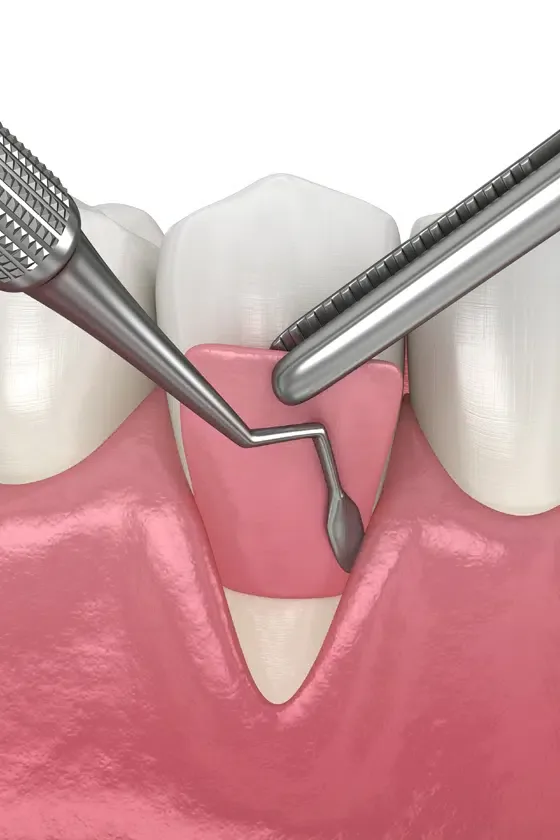
Modern gum grafting uses minimally invasive techniques — most notably the tunnel technique and connective tissue grafting — to restore the gum line with remarkable precision and minimal discomfort. Multiple teeth can often be treated in a single appointment, with most patients returning to normal activity within days.
- 1
Recession Evaluation
Periodontal probing, tissue biotype assessment, and imaging quantify recession depth and determine the most appropriate grafting technique for each site.
- 2
Graft Material Selection
A connective tissue graft from the palate provides the gold standard outcome. When palatal tissue is insufficient or patients prefer to avoid a donor site, processed cadaveric tissue (Alloderm) delivers excellent results.
- 3
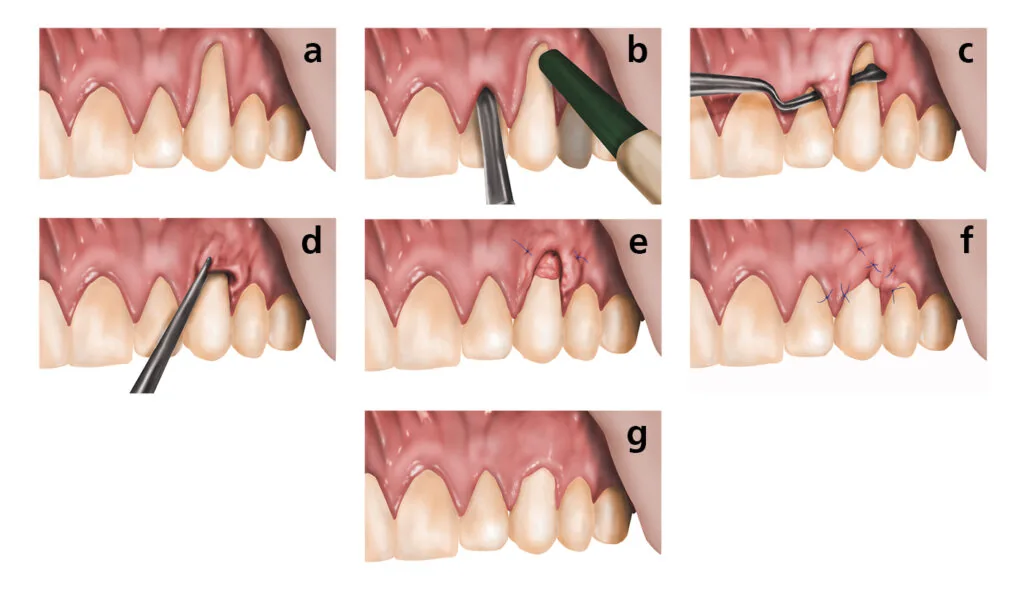
Tunnel Preparation
A micro-tunnel is created beneath the existing gum tissue without releasing the papillae, preserving blood supply and dramatically improving healing speed and comfort.
- 4
Graft Placement & Suturing
The graft is threaded into the tunnel and positioned to fully cover the exposed root surface. Fine sutures advance the gum tissue coronally and hold everything in place.
- 5
Healing & Integration
New keratinized gingival tissue integrates over 4–6 weeks. The final result — increased gum height, reduced sensitivity, and improved aesthetics — is stable long-term.
Benefits of Gum Recession Treatment
- Eliminates debilitating root sensitivity to hot, cold, and touch
- Shields roots from rapid decay and acid erosion
- Arrests further recession before more root is lost
- Restores a natural, even gum line for improved smile aesthetics
- Minimally invasive tunnel technique — no large incisions
- Rapid recovery, most patients resume normal activities in days
- Multiple teeth corrected in a single procedure
- Long-lasting, predictable results backed by decades of research