When a Tooth Cannot Be Saved
Sometimes a tooth is too damaged, decayed, or infected to be restored. In these cases, extraction is the right decision — but what happens immediately after the tooth is removed is just as important as the extraction itself.
When a tooth is lost, the surrounding bone begins to resorb within days. Without the tooth root stimulating the jawbone, up to 50% of bone volume can be lost within the first year. This bone loss can complicate or even prevent future implant placement, requiring more extensive and costly procedures down the road.
Acting at the time of extraction gives us the best opportunity to preserve the bone that is already there — setting the foundation for a seamless implant in the months ahead.
Extraction & Socket Preservation
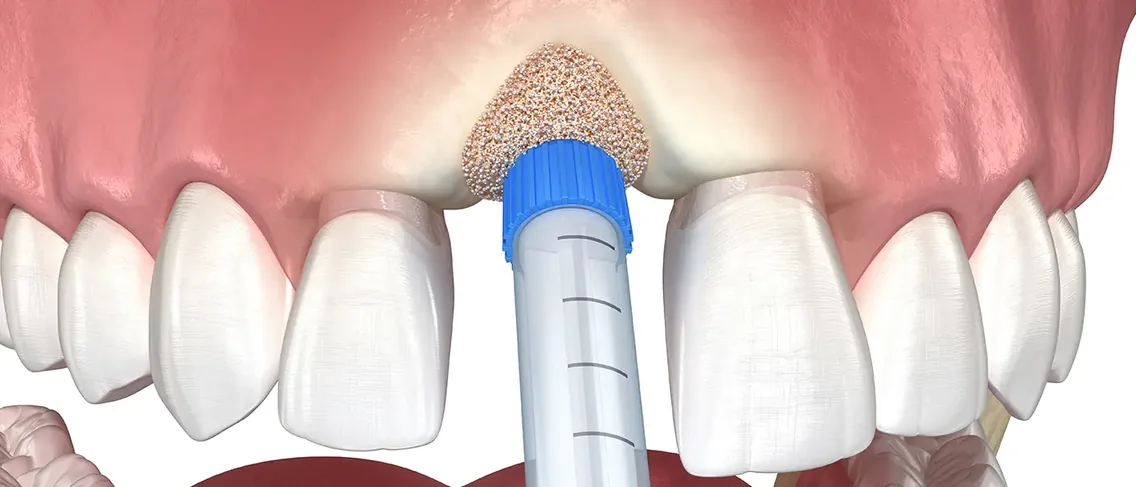
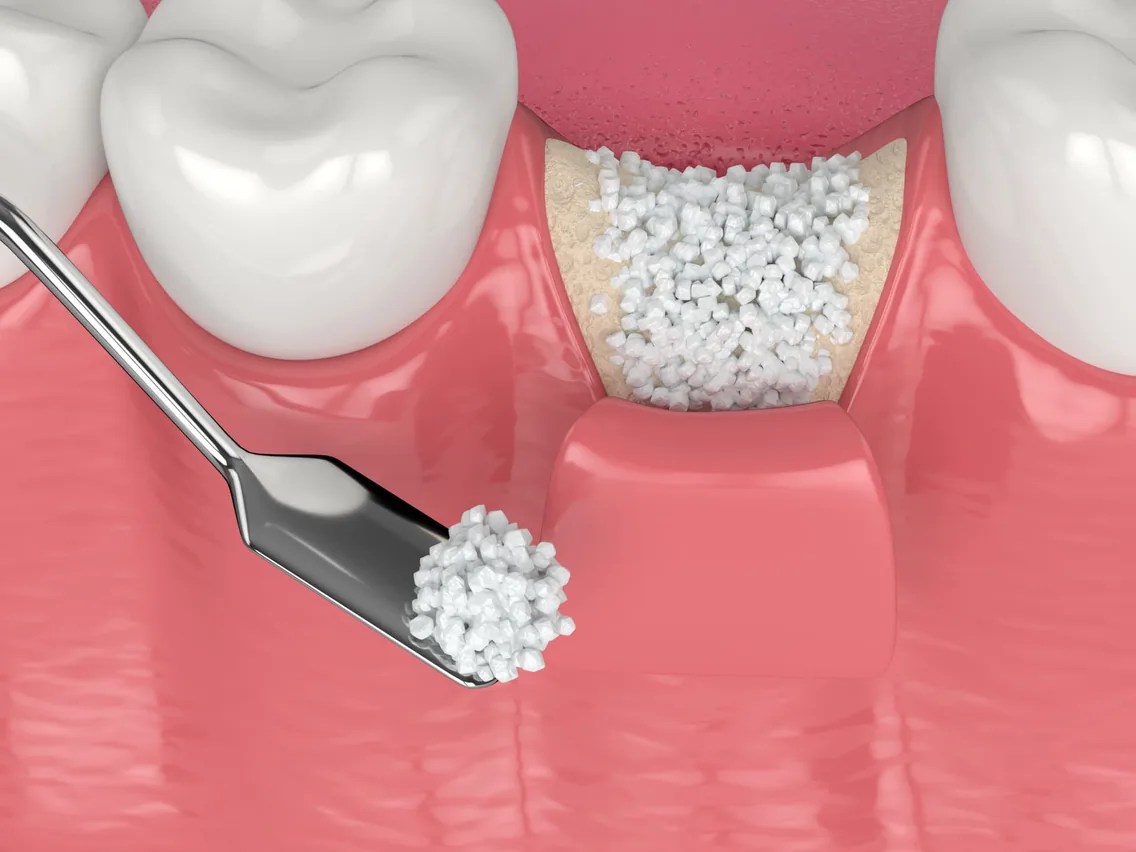
Socket preservation (also called alveolar ridge preservation) is a procedure performed at the time of tooth removal. Bone grafting material is placed directly into the empty socket immediately after extraction to maintain the shape and volume of the jawbone while it heals.
- 1
Gentle Extraction
The tooth is carefully removed with techniques that minimize trauma to the surrounding bone and soft tissue.
- 2
Socket Grafting
Bone graft material is placed into the socket immediately, filling the space left by the tooth root and preventing collapse.
- 3
Membrane Placement
A protective collagen membrane is placed over the graft to shield it and guide proper bone regeneration.
- 4
Healing Period
The site heals over approximately 4 months, allowing the graft to mature into solid, healthy bone ready to support an implant.
Benefits of Socket Preservation
- Prevents significant bone loss after extraction
- Maintains ideal ridge shape for future implant placement
- Reduces the need for more extensive bone grafting later
- Preserves the natural contour of your gum and jaw
- Performed at the same appointment as the extraction
- Minimizes overall treatment time and cost
- Creates the best possible foundation for a life-long implant