The Struggles of Traditional Dentures
Conventional removable dentures rest on the gum ridge and are held in place by suction or adhesive paste. While they restore appearance, they fall dramatically short on function. Studies show that denture wearers retain only 20–30% of their original chewing force, making it difficult — sometimes impossible — to eat fibrous vegetables, meats, or crusty breads. This dietary restriction carries real nutritional consequences over time.
Beyond eating limitations, loose dentures create social anxiety. Slippage while speaking, laughing, or eating in public is a common source of embarrassment that leads many patients to withdraw from social situations. Repeated movement also causes chronic sore spots and denture stomatitis from friction against the gum tissue.
Perhaps most critically, traditional dentures do nothing to address ongoing bone loss. Without tooth roots or implants stimulating the jawbone, the ridge beneath the denture continues to shrink — often requiring new dentures every few years as fit deteriorates. An implant-supported overdenture solves all of these problems at a far more accessible price point than a fully fixed restoration.
How We Treat It
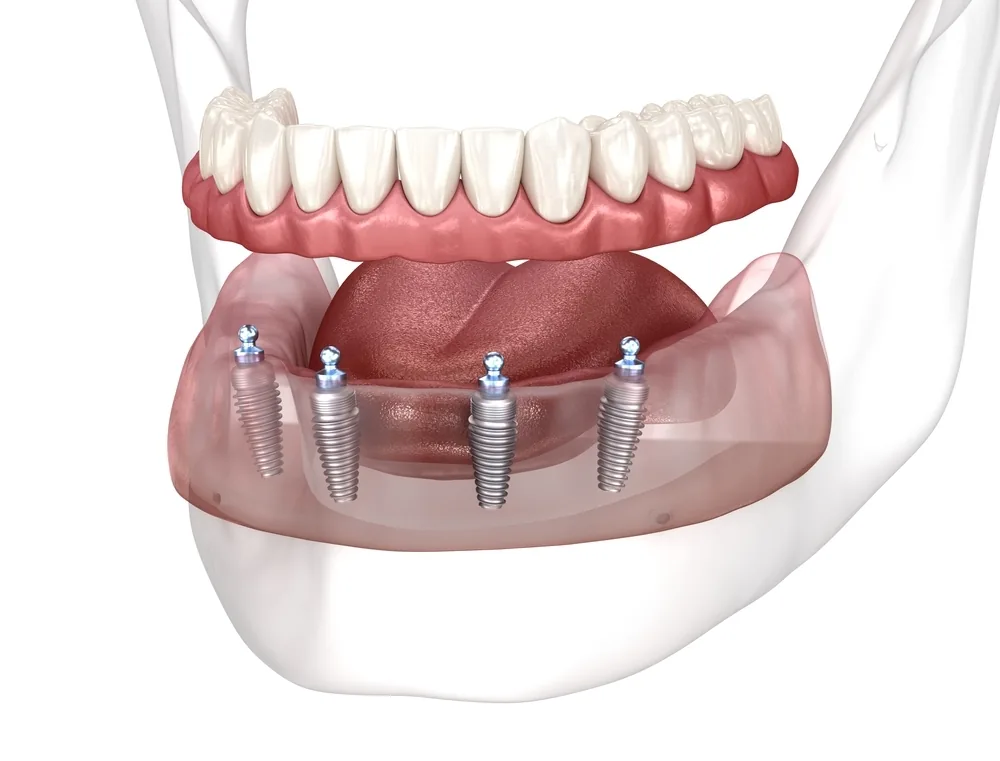
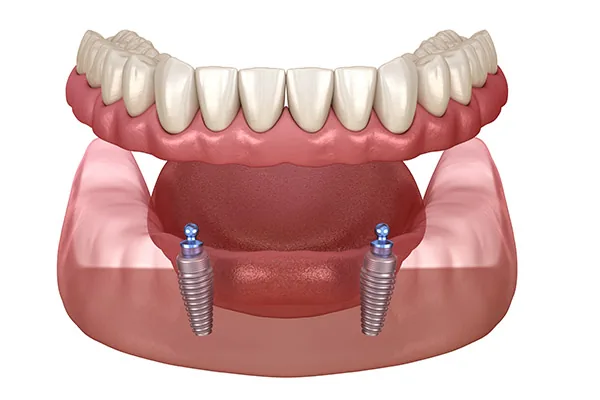
An implant-supported overdenture snaps onto 2–4 strategically placed implants using precision ball attachments or a rigid locator bar. The denture is removable for easy cleaning, yet locked firmly in place during use — eliminating all movement and restoring genuine confidence.
- 1
Comprehensive Planning
CBCT 3D imaging evaluates bone volume and density to determine the optimal number and position of implants for your jaw anatomy.
- 2
Implant Placement
Two to four titanium implants are placed at precisely planned positions in the jawbone under local anesthesia and optional sedation.
- 3
Osseointegration Healing
Over 3–6 months the implants fuse securely with the surrounding bone, establishing the stable anchoring foundation for the attachment system.
- 4
Attachment Connection
Ball-and-socket abutments or a precision milled bar are connected to the implants, providing the retentive interface for the overdenture.
- 5
Overdenture Delivery
A custom-fabricated denture with incorporated retaining clips is fitted, adjusted for bite, and snapped into place — you leave with a confident, stable smile.
Benefits of an Implant-Supported Overdenture
- Eliminates embarrassing slippage and movement
- Restores 60–70% of natural chewing force
- Significantly more affordable than fixed full-arch restorations
- Stimulates jawbone to prevent continued bone loss
- Easy to remove nightly for thorough cleaning
- Dramatically improved speech clarity and confidence
- Removes the need for messy adhesives or pastes in most cases
- Minimizes pressure sores on the gum tissue