When an Implant Begins to Fail
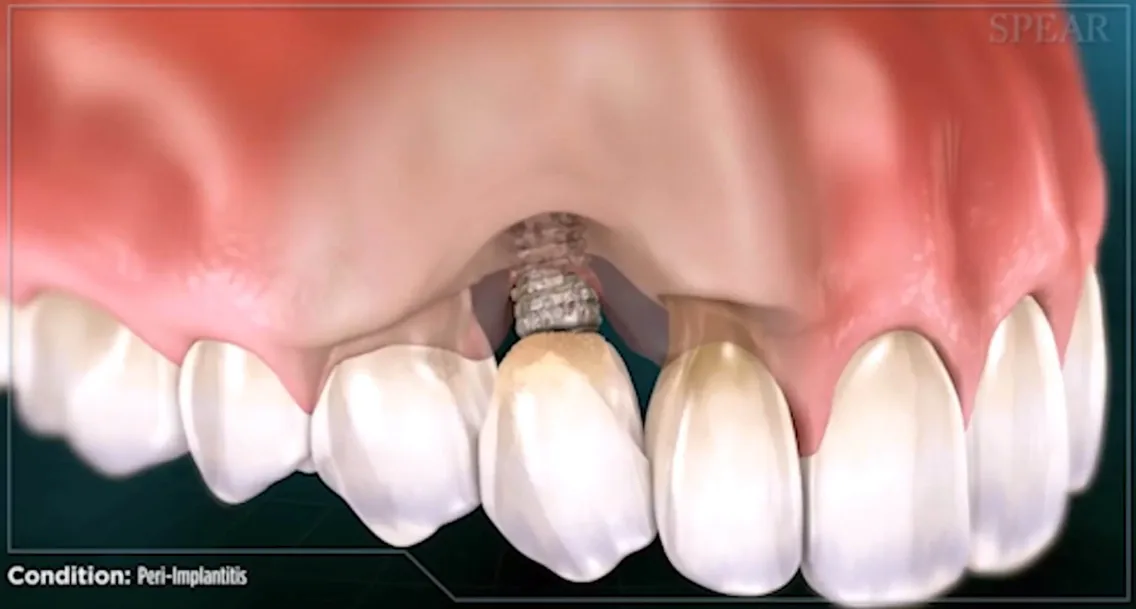
Dental implants have an excellent long-term track record, but they are not immune to disease. Peri-implantitis — an inflammatory bacterial infection of the tissues surrounding a dental implant — is the leading cause of late implant failure, affecting many implants over time. Like gum disease around natural teeth, it begins silently and progresses without pain until significant bone loss has already occurred.
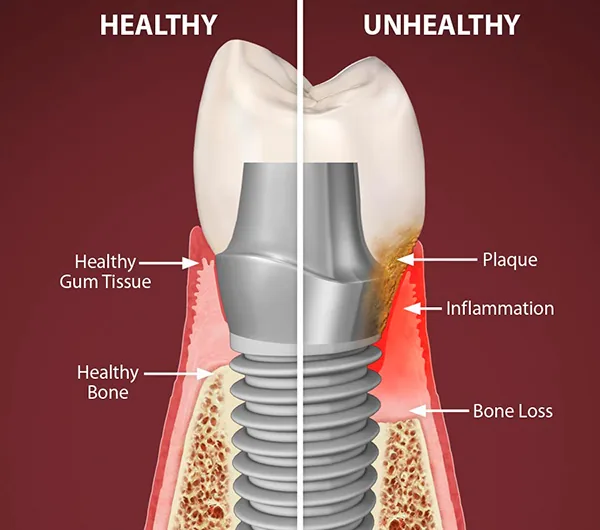
Peri-implantitis is driven by a biofilm of bacteria that colonizes the implant surface below the gum line. Risk factors include a history of periodontal disease, poor oral hygiene, smoking, uncontrolled diabetes, and insufficient bone at the time of placement. Unlike natural teeth, implants lack a periodontal ligament — meaning they have less biological defense against bacterial invasion, and bone loss once it begins can be rapid.
Warning signs include bleeding or pus around the implant, swollen or red gum tissue, a chronic bad taste or odor, increasing pocket depth on probing, and on X-ray, a telltale "saucer-shaped" pattern of bone destruction around the implant body. Implant mobility is a late finding and often indicates that salvage is no longer possible. This is why early identification by a periodontist is critical — the sooner treatment begins, the better the chance of saving the implant entirely.
How We Treat It
As periodontists, diagnosing and treating peri-implantitis is a core specialty. Treatment is staged based on disease severity — from non-surgical decontamination for early cases, to regenerative or resective surgery for advanced bone loss. Our goal is always to save the implant and restore periodontal health.
- 1
Comprehensive Diagnosis
Probing depths, X-ray imaging, and clinical examination precisely map the extent of bone loss and determine the stage of peri-implantitis before any treatment is planned.
- 2
Non-Surgical Decontamination
For early-stage disease, implant surface decontamination using ultrasonic scalers and titanium curettes removes the bacterial biofilm with minimal tissue disruption.
- 3
Surgical Intervention
For moderate to advanced cases, surgical access allows complete debridement of the implant surface and either resective recontouring or regenerative bone grafting to restore lost structure.
- 4
Extraction in Severe Cases
In more severe cases where the implant cannot be saved, removal is necessary to prevent further bone loss. These cases often require extensive bone grafting to rebuild the site for future treatment — work that is best handled by a periodontist. If you are facing a failing implant, it is strongly recommended to be seen by a periodontal specialist as early as possible.
Benefits of Early Peri-Implantitis Treatment
- Stops progressive bone destruction before it becomes irreversible
- Preserves your implant — and your investment
- Avoids the complexity and cost of re-implantation surgery
- Non-surgical options effective in early-stage disease
- Laser decontamination minimizes trauma to surrounding tissue
- Regenerative bone grafting can restore lost bone structure
- Protects adjacent natural teeth from infection spread