Not Enough Bone for Upper Jaw Implants?
When back teeth in the upper jaw are lost, the surrounding bone resorbs and the maxillary sinus — the large air cavity just above — gradually expands downward into that space. This process, called sinus pneumatization, can leave as little as 3–4 mm of bone where a minimum of 8mm is needed for an implant.
Many patients in this situation have been told they cannot have implants in the upper back jaw. A sinus lift (sinus augmentation) changes that — rebuilding the bone platform needed for safe, lasting implant placement.
The good news: approximately 90% of patients who need a sinus lift only need the simpler internal approach, which can be performed at the same time as implant placement — with no additional healing time and no noticeable difference in the patient experience.
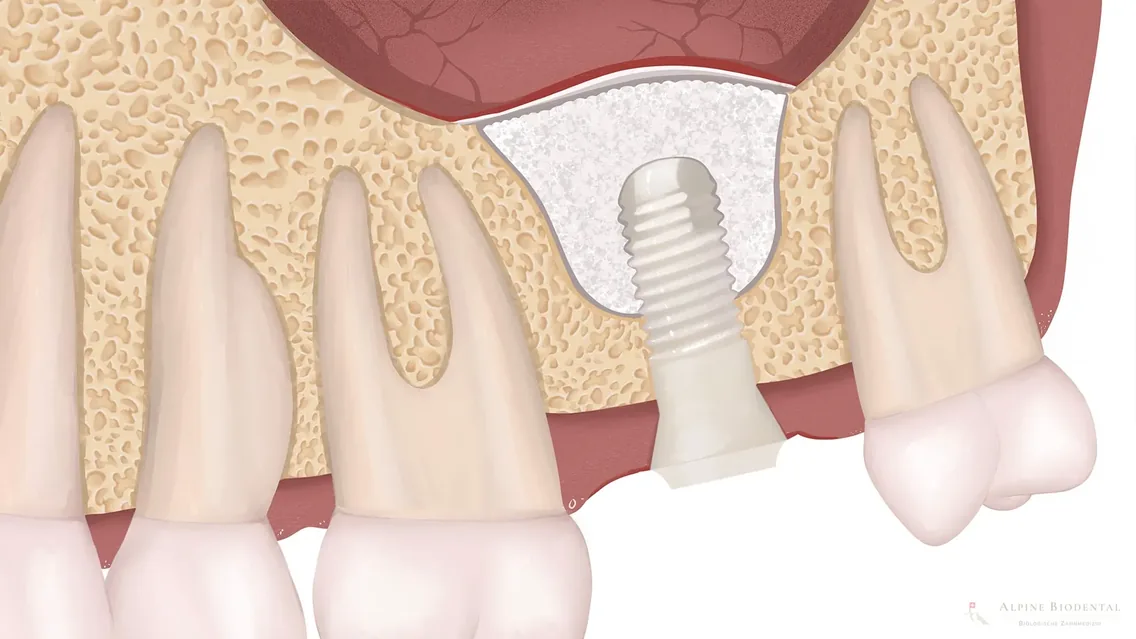
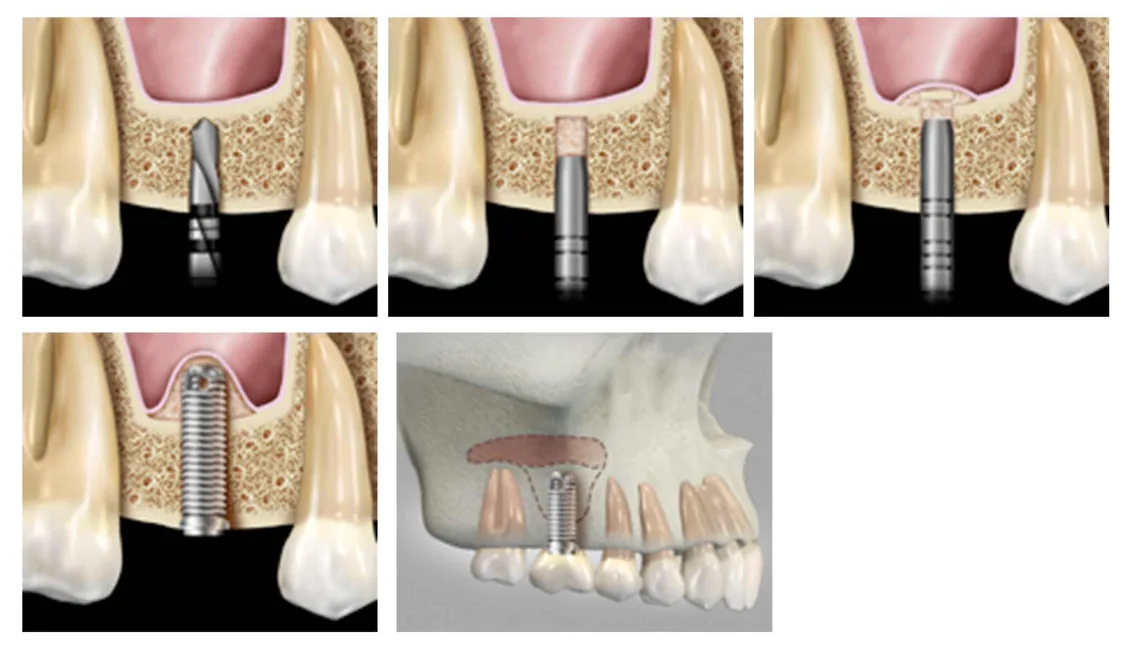
Internal Sinus Lift
Performed entirely through the implant site itself using a gentle osteotome technique. The implant is placed at the exact same appointment — patients typically notice no difference compared to a regular implant procedure.
- 1
3D CBCT Imaging
Precisely measures residual bone height and sinus anatomy to confirm the internal approach is appropriate.
- 2
Osteotome Elevation
Through the implant socket, a specialized instrument gently lifts the sinus floor just enough to create space for the bone graft and implant.
- 3
Bone Graft Placement
A small volume of bone graft material is placed to fill the newly created space beneath the sinus membrane.
- 4
Same-Day Implant Placement
The titanium implant is immediately inserted at the same appointment. No additional healing phase is required before placement.
- 5
Osseointegration & Crown
The implant integrates with surrounding bone over 3–6 months, then your restorative dentist places the permanent crown.
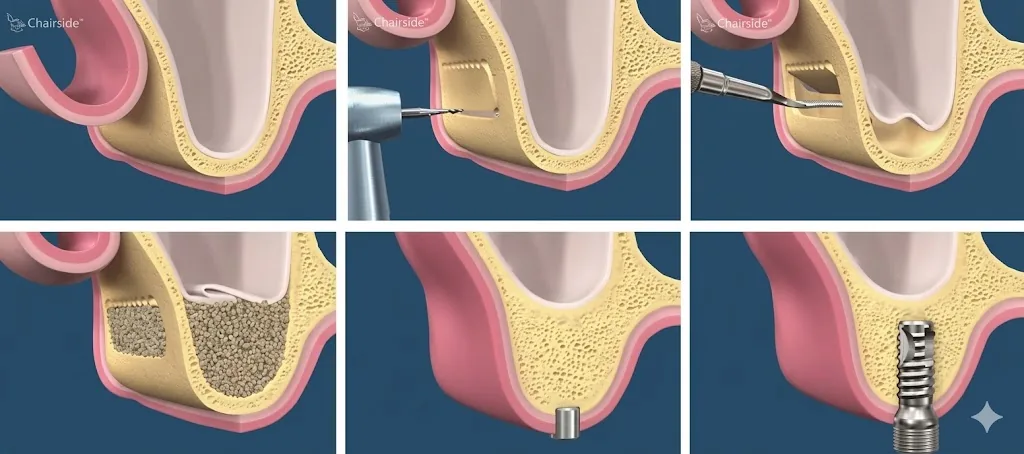
Lateral Sinus Lift
Reserved for cases with very minimal residual bone (under 4 mm). A small window is carefully made in the side wall of the sinus, allowing a larger volume of bone graft to be precisely placed. This approach requires a separate healing phase before implants can be placed.
- 1
3D CBCT Imaging
Confirms that residual bone is under 4 mm, requiring the lateral window approach.
- 2
Lateral Window Creation
A small access window is created in the lateral wall of the sinus under local anesthesia, allowing direct visualization and access to the sinus cavity.
- 3
Large-Volume Bone Graft
The sinus membrane is elevated and a substantial volume of bone graft is packed into the space. A collagen membrane covers the window to protect the graft.
- 4
Graft Maturation (4–9 Months)
The site heals and the graft matures into mature bone volume sufficient for implant anchorage.
- 5
Implant Placement & Crown
Once sufficient bone volume is confirmed by CBCT, implants are placed and the restoration proceeds as normal.
Benefits of a Sinus Lift
- 90% of patients treated with a single same-day procedure
- Implant placed at the same visit in most cases
- Enables implants where previously impossible
- Long-term bone volume preservation
- 95%+ predictable success rate
- Eliminates need for removable partial dentures