When a Tooth Breaks Below the Gumline
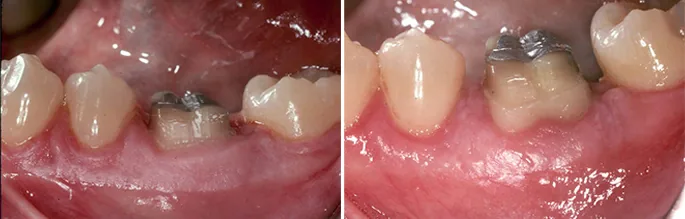
Functional crown lengthening is indicated when a tooth has fractured, decayed, or worn down to a level at or below the gumline — leaving insufficient tooth structure for a crown or restoration to grip. Without adequate exposed tooth structure above the biological width (the critical 3mm attachment zone below the gum), a crown cannot be placed reliably.
Attempting to restore a tooth without addressing this problem leads to chronic gum inflammation, restoration failure, recurrent decay at the margin, and eventually tooth loss. Many patients are told their tooth cannot be saved — when in reality, functional crown lengthening can expose enough tooth structure to make a secure, lasting restoration possible.
By surgically repositioning the gum and bone to the appropriate level, we create the space the restorative dentist needs to place a well-fitting, biologically sound crown — saving a tooth that might otherwise be extracted.
How We Make the Tooth Restorable
Functional crown lengthening is a single outpatient procedure performed under local anesthesia. The periodontist surgically exposes the tooth structure needed for a stable crown — then coordinates with your restorative dentist for the final restoration.
- 1
Treatment Planning with Your Dentist
We coordinate with your restorative dentist to determine exactly how much tooth structure needs to be exposed for a predictable crown margin and long-term periodontal health.
- 2
Local Anesthesia
The area is thoroughly numbed. Sedation options are available for patients who prefer a more relaxed experience.
- 3
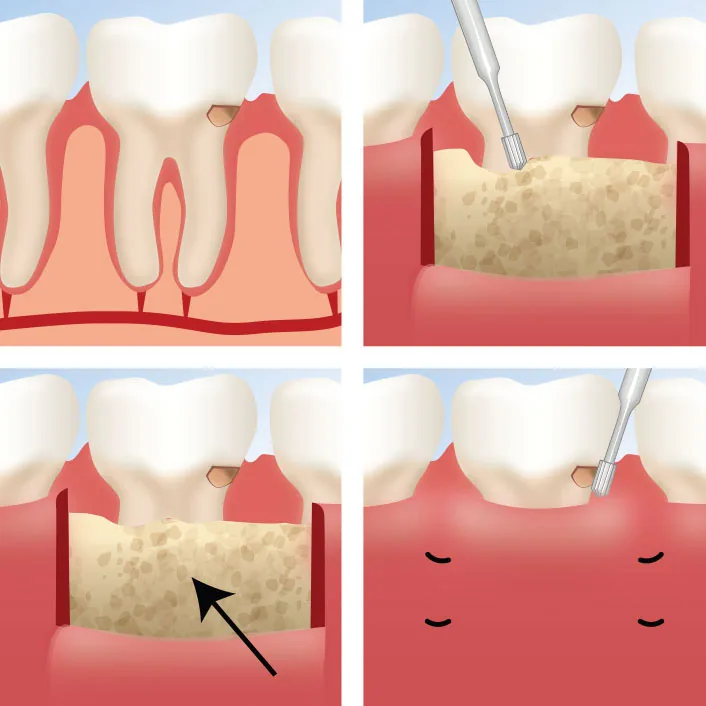
Incisions & Flap Reflection
Precise incisions release the gum tissue, which is gently folded back to fully expose the tooth margin and the surrounding bone.
- 4
Osseous Recontouring
The bone is carefully reshaped to establish the proper biological width below the planned crown margin — ensuring the gum will remain healthy and stable after the final restoration is placed.
- 5
Suturing & Healing
The gum is repositioned and sutured. Most patients return to their restorative dentist for the final crown within 4–6 weeks once the tissue has stabilized.
Benefits of Functional Crown Lengthening
- Saves teeth that would otherwise require extraction
- Enables secure, long-lasting crown or restoration placement
- Eliminates the risk of chronic gum inflammation from a poorly fitting crown
- Single outpatient procedure with permanent results
- Establishes the correct biological width for long-term gum health
- Performed in close coordination with your restorative dentist
- Restores function, comfort, and confidence in the affected tooth