Two Types of Bone Loss — Both Treatable
Bone loss around the teeth and jaw is more common than most patients realize, and it occurs in two distinct ways — each with its own cause, pattern, and treatment approach.
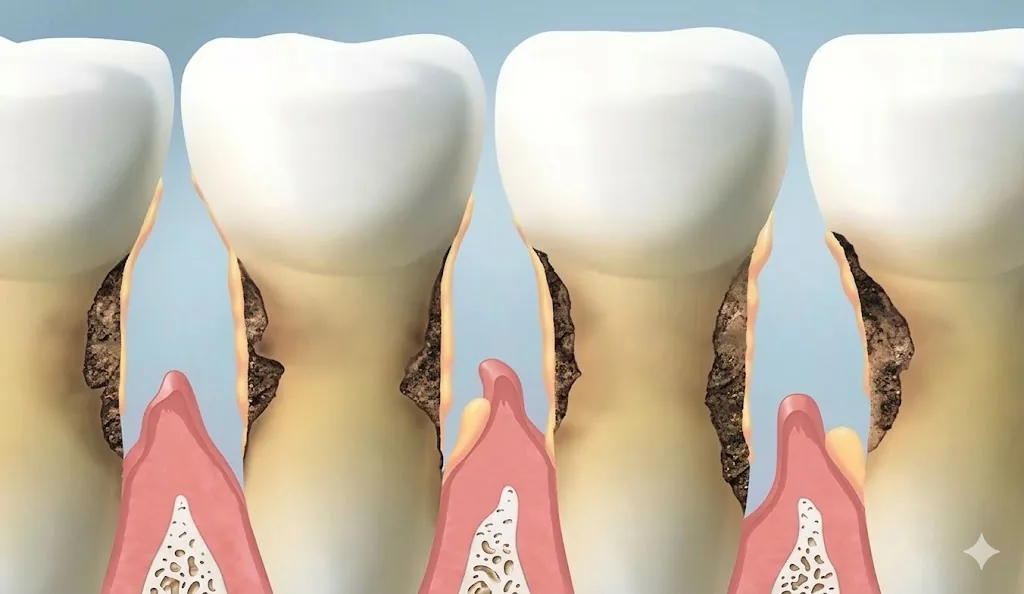
The first type occurs around teeth that are still present. When gum disease progresses to its advanced stages, the bacteria and your body's inflammatory response begin destroying the bone that anchors your teeth in place. This leads to deep pockets, loosening teeth, and if left untreated, eventual tooth loss. This type of bone loss is called periodontal bone loss.
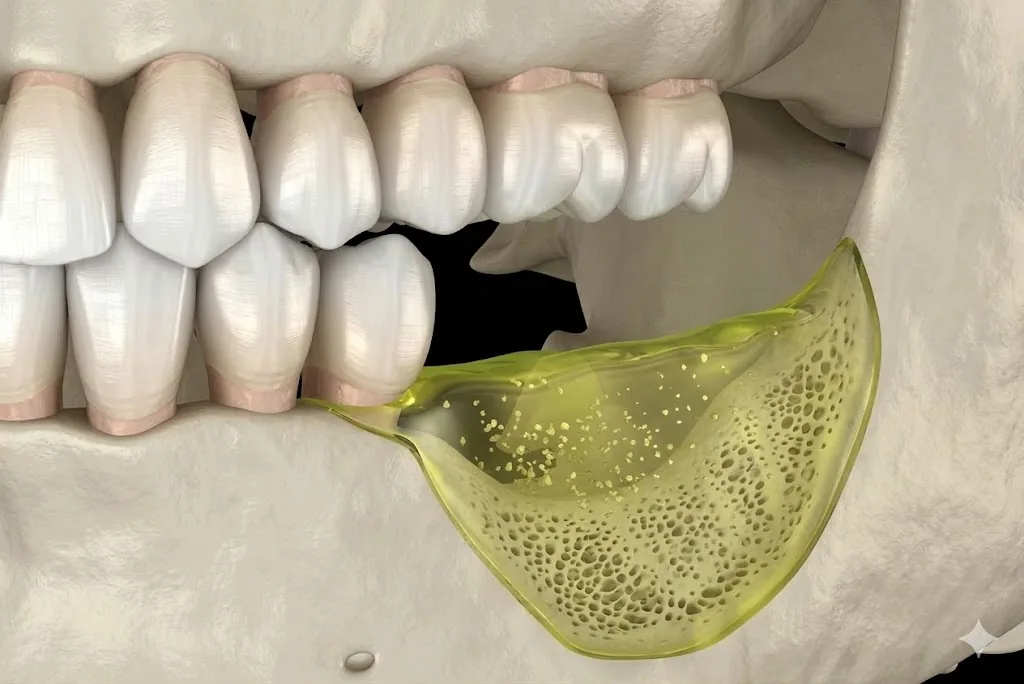
The second type occurs after a tooth is extracted. Once a tooth is removed, the jaw bone that once surrounded its root no longer receives the stimulation it needs to maintain itself. The body begins to resorb and shrink that bone — often significantly — within the first few months after extraction. Without intervention, this can leave insufficient bone to ever support a dental implant.
The good news is that modern regenerative techniques can address both types of bone loss — rebuilding what was lost and restoring the foundation needed for a healthy, functional smile.
Regenerating Bone Lost to Gum Disease
When periodontal bone loss creates deep defects around a tooth, a regenerative procedure can rebuild that lost bone — saving teeth that might otherwise require extraction. This is one of the most powerful tools in periodontal surgery.
- 1
Accessing the Defect
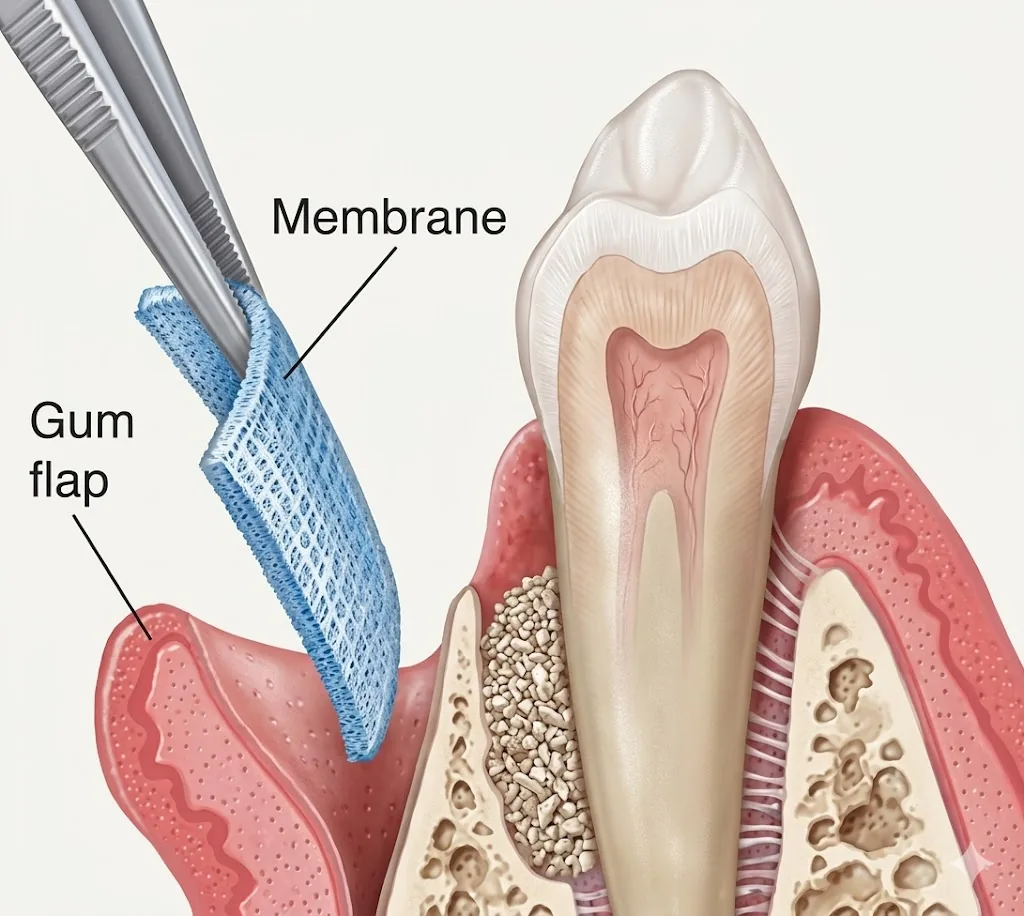
The gum tissue is gently reflected back to expose the bone defect and the root surface beneath, giving us complete visibility and access to the area that needs treatment.
- 2
Thorough Root Cleaning
The root surface is meticulously cleaned of all bacteria, calculus, and diseased tissue using hand instruments and ultrasonic scalers under direct visualization.
- 3
Emdogain Application
Emdogain — a biologic protein derived from developing tooth tissue — is applied to the root surface. It signals the body to regenerate the natural attachment apparatus: bone, cementum, and periodontal ligament.
- 4
Bone Graft Placement
A bone grafting material is carefully packed into the defect to provide a scaffold for new bone growth and to restore lost volume around the root.
- 5
Membrane Placement
A collagen membrane is placed over the graft to protect it and prevent soft tissue from growing into the space before bone can form — a process called guided tissue regeneration (GTR).
- 6
Closure & Healing
The gum tissue is precisely sutured closed over the regenerative site. Over the following months, new bone and attachment tissue form within the protected space.
Rebuilding Bone for Implants — Even When You Were Told It Wasn't Possible
Many patients are told by their dentist that they are "not a candidate for implants" because too much bone has been lost after an extraction. This can be discouraging — but it is often not the final word.
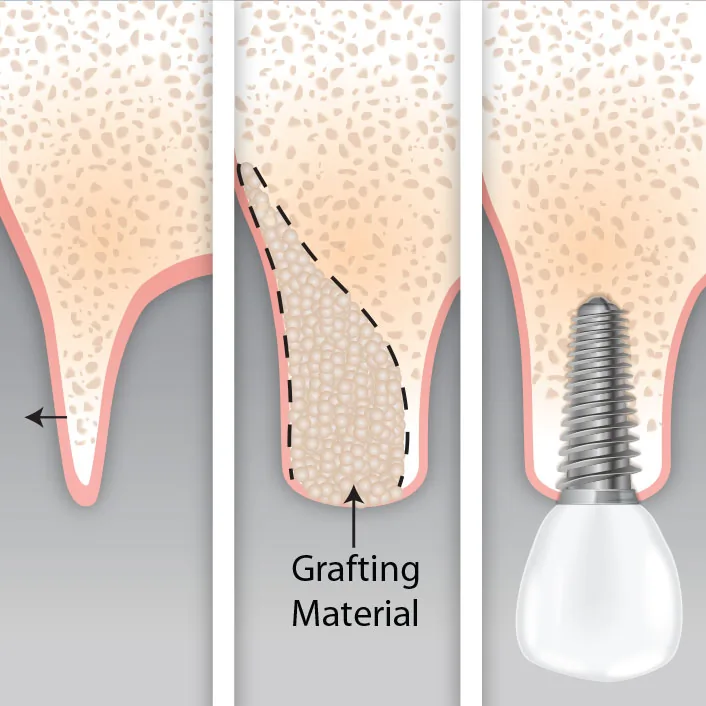
Guided bone regeneration (GBR) is a surgical technique that uses bone grafting material and a protective membrane to grow new bone in areas where significant volume has been lost. By creating a protected space and providing the biological scaffolding the body needs, we can frequently rebuild enough bone to place a dental implant — even in cases where patients were previously told that implants were impossible.
This does not apply to every situation. An evaluation with a 3D CBCT scan is essential to assess what bone remains and determine whether regeneration is feasible. But the results in appropriate candidates can be truly transformative — turning a "no" into a "yes" and restoring an option that patients thought was gone forever.
If you have been told you cannot have an implant due to bone loss, we encourage you to come in for an evaluation. You may have more options than you think.
Benefits of Bone Regeneration
- Saves teeth that would otherwise require extraction
- Restores implant candidacy when patients were told it wasn't possible
- Rebuilds the natural bone and attachment around existing teeth
- Prevents continued bone loss and tooth mobility
- Creates a stable, long-term foundation for implants
- Transforms treatment outcomes that seem hopeless